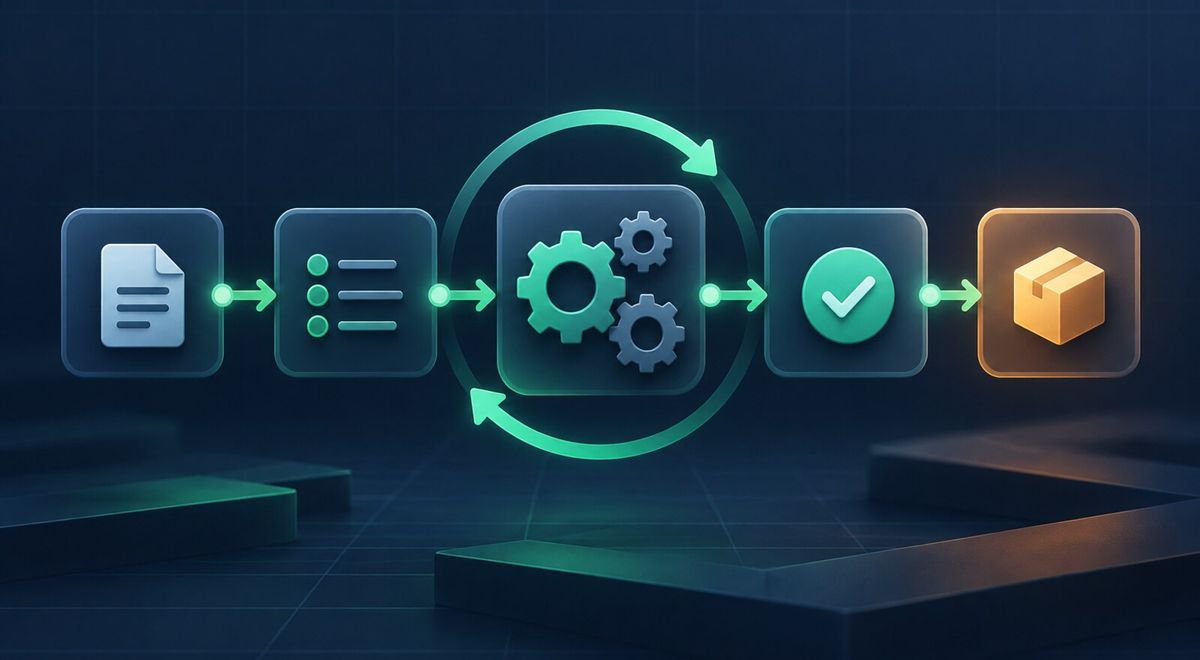
The SMB Automation-Readiness Checklist
Are you ready to automate? (short answer)
You’re ready to automate when a task repeats on a schedule, follows the same rules every time, and someone on your team could describe the steps in under five minutes. If you’re re-typing the same data into two systems, letting leads sit in an inbox before anyone qualifies them, or rebuilding the same report by hand every week, that’s a readiness signal. The automation-readiness checklist below turns that judgment call into something you can actually score.
The automation-readiness checklist
Work through these. The more you check, the more ready the process is for automation, and the better the return once you build it.
- The task repeats on a fixed schedule (daily, weekly, monthly), not a one-off.
- The steps rarely change: same inputs, same decision rules, same output format.
- Someone could write the exact steps down in under five minutes.
- The same data gets typed or copied into more than one system.
- Leads or requests sit in an inbox or spreadsheet before anyone acts on them.
- Reports get rebuilt by hand from the same sources every cycle.
- You can point to where the process starts and where it ends.
- Your source data lives in a consistent format, even if that format is “just” a spreadsheet.
- Someone is accountable for the outcome, not just for doing the task.
Signs you’re ready (and signs you’re not yet)
You’re ready when the process is well-defined and the pain is in the repetition, not the judgment. Sales intake, lead qualification, status reporting, and data hand-offs between tools are the classic candidates: rule-based, repetitive, and measurable.
You’re not there yet if the process changes every time someone runs it, if two people on your team would describe the steps differently, or if the underlying data is inconsistent enough that nobody fully trusts it. None of that rules automation out. It means the workflow audit (below) needs to fix the process before a tool automates it.
What to automate first
Start with the processes that combine high frequency with low judgment: lead qualification and intake, status reporting, and hand-offs between systems that don’t talk to each other. These are usually the highest-ROI starting points because they’re rule-based, they happen constantly, and the “before” state is almost always a person copying data by hand.
Tools like Zapier, n8n, and Flowise cover most of this ground without custom software. For a deeper look at where agent-based automation fits beyond simple triggers and actions, see AI agent development for small businesses.
How iServU scopes an automation build
Every engagement starts with a workflow audit: mapping the current process end to end, identifying where the manual effort actually goes, and separating what’s rule-based from what still needs a human call. That audit sets the scope before any building starts, and it’s also what the free assessment below covers.
Building itself happens in Zapier, n8n, or Flowise, chosen by fit rather than preference, and the goal is always the same: fewer manual hours and cleaner data flowing into the systems you already use. On a recent automation build, that approach cut manual workload by 30% and unqualified leads reaching the sales team by 25%. See the full picture on the AI automation page.
FAQ
How do I know if my business is ready to automate?
If a task repeats on a schedule, follows the same rules every time, and someone could explain the steps in under five minutes, it’s a strong candidate. Run it against the checklist above: the more boxes it checks, the more ready it is.
What should I automate first?
Lead qualification, intake, and reporting are the highest-ROI starting points for most small businesses. They’re rule-based and repetitive, which is exactly what tools like Zapier, n8n, and Flowise are built for.
How long does an automation project take?
It depends on how many systems are involved and how consistent the source data already is. A workflow audit up front sets a realistic timeline before any building starts, and that’s what the free assessment covers.
Do I need clean data before automating?
Not perfect data, but consistent data. If the same field means different things in different systems, or key values go missing, automating a broken process just breaks it faster. Fixing data hygiene is usually step one, not a blocker to starting.
Get your free automation-readiness assessment
If you’re not sure where your business lands on this checklist, the free automation-readiness assessment walks through it with you and points to where automation would actually pay off first.